
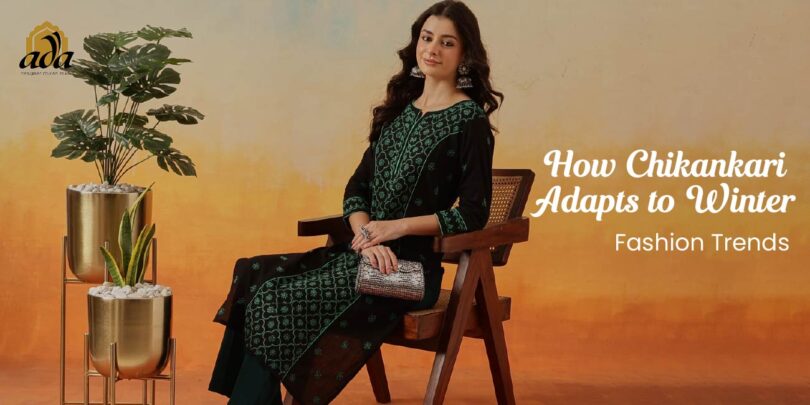

When winter arrives, the question “How Chikankari Adapts to Winter Fashion Trends” becomes central for fashion enthusiasts who love ethnic elegance but also need warmth and comfort. Chikankari, a centuries-old hand embroidery tradition from Lucknow, has long been associated with lightweight, airy fabrics suited to summer. Today, designers and artisans have reinvented Chikankari for the colder months, merging heritage craftsmanship with contemporary winter fabrics, rich colours, and stylish layering techniques.
Winter fashion no longer limits Chikankari to soft cotton kurtas; it now features versatile winter-ready outfits that are both functional and luxurious.
Evolution of Chikankari from Summer to Winter Wear
Traditionally, Chikankari embroidery was crafted on lightweight muslin, cotton, and fine georgette to keep the wearer cool in India’s hot climate. These fabrics, while perfect for summer, offered little insulation during winter.
Over the last decade, however, designers have expanded the Chikankari canvas to include heavier fabrics such as wool blends, velvet, silk, and thicker cotton. This transformation allows Chikankari to remain relevant during winter without compromising on the intricacy of its embroidery.
- From breathable to insulated fabrics: Wool-cotton blends, velvet, and silk maintain the embroidery’s delicate appearance while providing warmth.
- Maintaining authenticity: Even on thicker fabrics, traditional stitches like bakhiya, phanda, and murri are retained, showcasing craftsmanship alongside functionality.
- Adaptation across styles: From kurtas to jackets, coats, and long tunics, Chikankari now integrates into various winter outfit silhouettes.
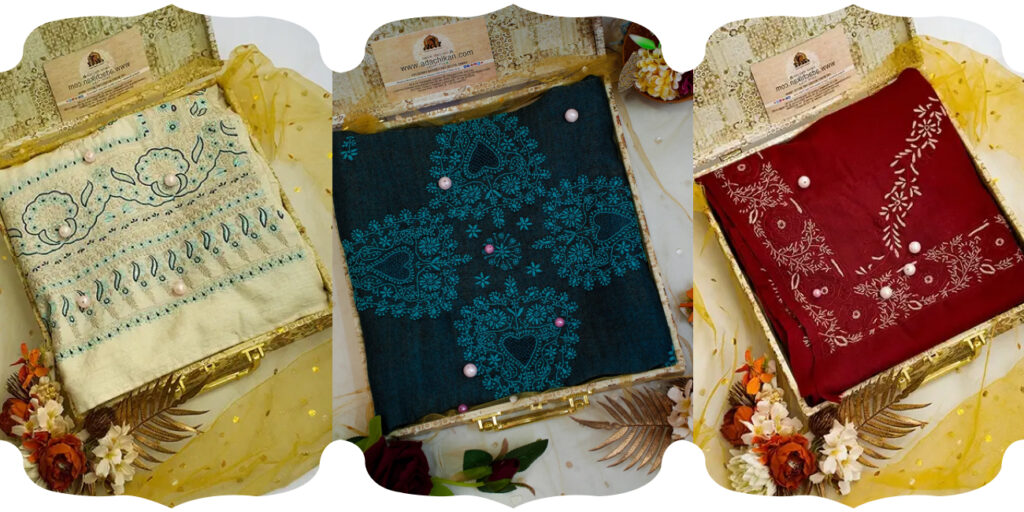
Winter-Friendly Fabrics for Chikankari
Choosing the right fabric is key to adapting Chikankari for winter. Each fabric not only affects warmth but also determines how the embroidery appears and complements winter layering:
- Wool and Wool Blends
- Ideal for casual and semi-formal kurtas and tunics.
- Keeps you warm without hiding the embroidery.
- Can be styled under jackets or with scarves for extra insulation.
- Ideal for casual and semi-formal kurtas and tunics.
- Velvet
- Perfect for festive occasions or evening parties.
- Enhances the richness of Chikankari with its soft sheen.
- Often used for sarees, lehengas, or long tunics.
- Perfect for festive occasions or evening parties.
- Silk
- Lightweight but slightly insulating, silk Chikankari works beautifully for indoor winter events.
- Adds a luxurious touch to festive or wedding attire.
- Lightweight but slightly insulating, silk Chikankari works beautifully for indoor winter events.
- Heavy Cotton or Cotton Blends
- Suitable for mild winters or transitional weather.
- Provides comfort and breathability while retaining the embroidery’s elegance.
- Suitable for mild winters or transitional weather.
- Georgette & Chiffon with Inner Lining
- When paired with thermal inner layers, these fabrics allow the embroidery to shine without sacrificing warmth.
- When paired with thermal inner layers, these fabrics allow the embroidery to shine without sacrificing warmth.
Styling Chikankari in Winter
Winter styling with Chikankari involves blending tradition with seasonal practicality. Here are some detailed tips:
1. Layering
- Pair Chikankari kurtas with long woollen jackets or structured coats.
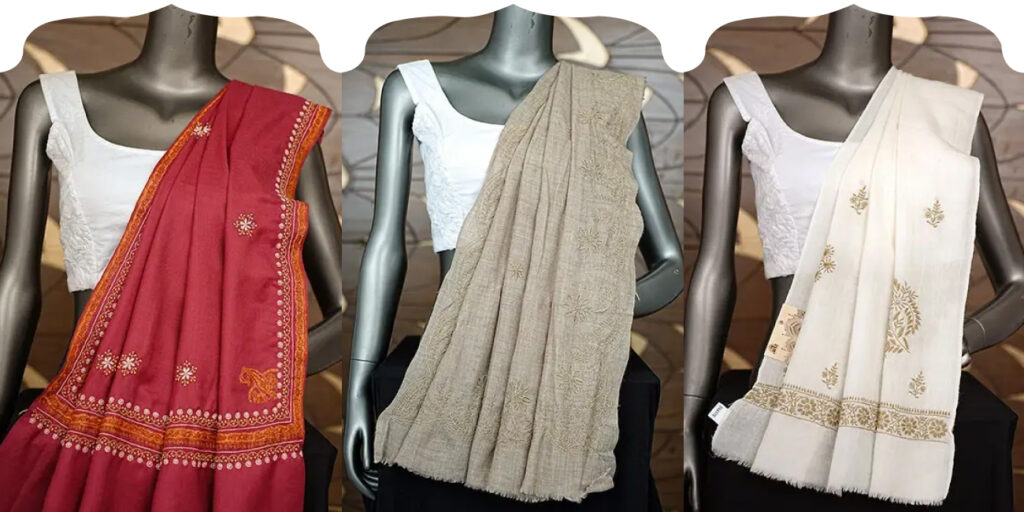
- Add embroidered or plain pashmina stoles to highlight the handwork while staying warm.
- Layering also protects delicate embroidery from winter winds.
2. Embracing Rich Colours
- Move beyond summer pastels: opt for navy blue, wine red, emerald green, charcoal, deep mustard, and maroon.
- Dark, saturated colours not only suit winter aesthetics but also make embroidery stand out.
3. Longer Silhouettes and Structured Cuts
- Ankle-length kurtas, trench-style tunics, or floor-length dresses work best in winter.
- Straight-cut or A-line kurtas allow thermal layers underneath without compromising the silhouette.
- Adding belts or waist-cinching accessories modernizes the look.
4. Accessories for Winter Elegance
- Pair Chikankari outfits with boots, leather jackets, or structured coats.
- Statement jewellery (like oxidized silver or gold-plated pieces) complements the embroidery and elevates the outfit for festive events.
- Scarves, wraps, and embroidered shawls add both warmth and aesthetic appeal.
Chikankari for Special Winter Occasions
Winter weddings, festive dinners, or cultural gatherings demand Chikankari that combines luxury and warmth:
- Velvet or silk ensembles: Ideal for evening events, these fabrics highlight the embroidery while keeping you cozy.
- Layering with festive jackets: Pairing Chikankari kurtas with embellished jackets or long coats adds sophistication.
- Colour selection: Deep reds, blues, and greens paired with metallic embroidery elevate your festive wardrobe.
- Shawls and stoles: Using embroidered pashmina stoles keeps you warm and maintains the traditional aesthetic.
Why Chikankari’s Winter Adaptation Matters
The adaptation of Chikankari for winter reflects both cultural preservation and innovation:
- Seasonal versatility: Chikankari is no longer limited to summer wardrobes; it can be worn year-round.
- Craftsmanship meets practicality: The shift to warmer fabrics preserves traditional embroidery while adding comfort.
- Market relevance: Winter-ready Chikankari collections expand opportunities for designers and brands targeting festive seasons and wedding markets.
Tips for Buying Winter Chikankari
- Check fabric thickness: Choose velvet, wool-blends, or layered cotton for proper insulation.
- Opt for winter colours: Darker shades ensure your outfit feels seasonal and luxurious.
- Prioritize length: Longer kurtas or tunics work better for layering and warmth.
- Pair wisely: Complement with boots, jackets, and stoles to create complete winter ensembles.
- Invest in detailing: Heavy embroidery on thicker fabrics maintains the craftsmanship while offering elegance.
“How Chikankari Adapts to Winter Fashion Trends” showcases the evolution of traditional embroidery into a year-round fashion statement. By transitioning from light summer fabrics to heavier wool, velvet, silk, and cotton blends, and by embracing layering, richer colours, and modern silhouettes, Chikankari continues to stay timeless.
Whether for casual outings, office wear, festive celebrations, or winter weddings, Chikankari proves that handcrafted elegance and winter comfort can coexist beautifully. It’s a testament to how tradition adapts, evolves, and thrives across seasons.
FAQs:
Yes, Chikankari is now crafted on wool blends, velvet, silk, and heavier cotton, making it perfect for winter wear.
Wool-cotton blends, velvet, silk, and thick cotton are ideal for warmth while highlighting embroidery.
Deep shades like navy, wine red, emerald green, maroon, and charcoal work best for winter fashion.
Absolutely! Pair kurtas or tunics with jackets, coats, or pashmina stoles for warmth and style.
Yes, heavier fabrics with rich embroidery make Chikankari elegant for winter weddings and festive occasions.
Combine traditional embroidery with boots, belts, jackets, or structured coats for a contemporary winter look.
Explore more styles, stories, and shopping tips on Ada Chikan Designer Studio.
Chikankari Trousseau Essentials for Brides: Timeless Handcrafted Elegance
Accessorizing Chikankari: Jewelry, Bags & Dupattas for Wedding Functions
Ada Chikan in Mumbai: Ada Brings Royal Chikankari to the City of Dreams